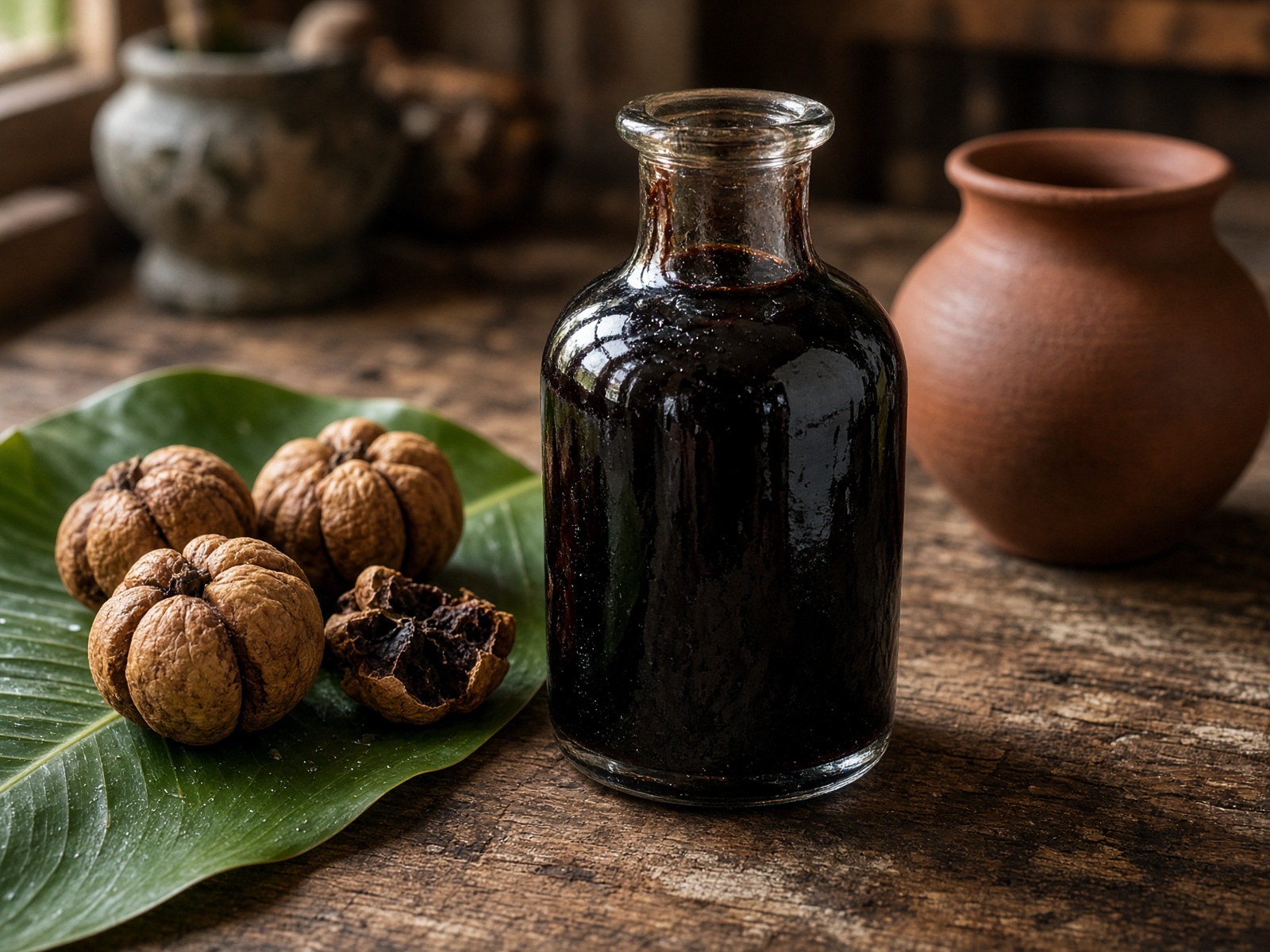

South of the district, where Kodagu leans into the forest around Kutta, the panapuli trees drop their fruit after the first real monsoon. Subbi walks the estate edge at dawn and gathers what has fallen — never what still hangs. The fruit is Garcinia gummi-gutta, cousin to kokum, wild and sour.
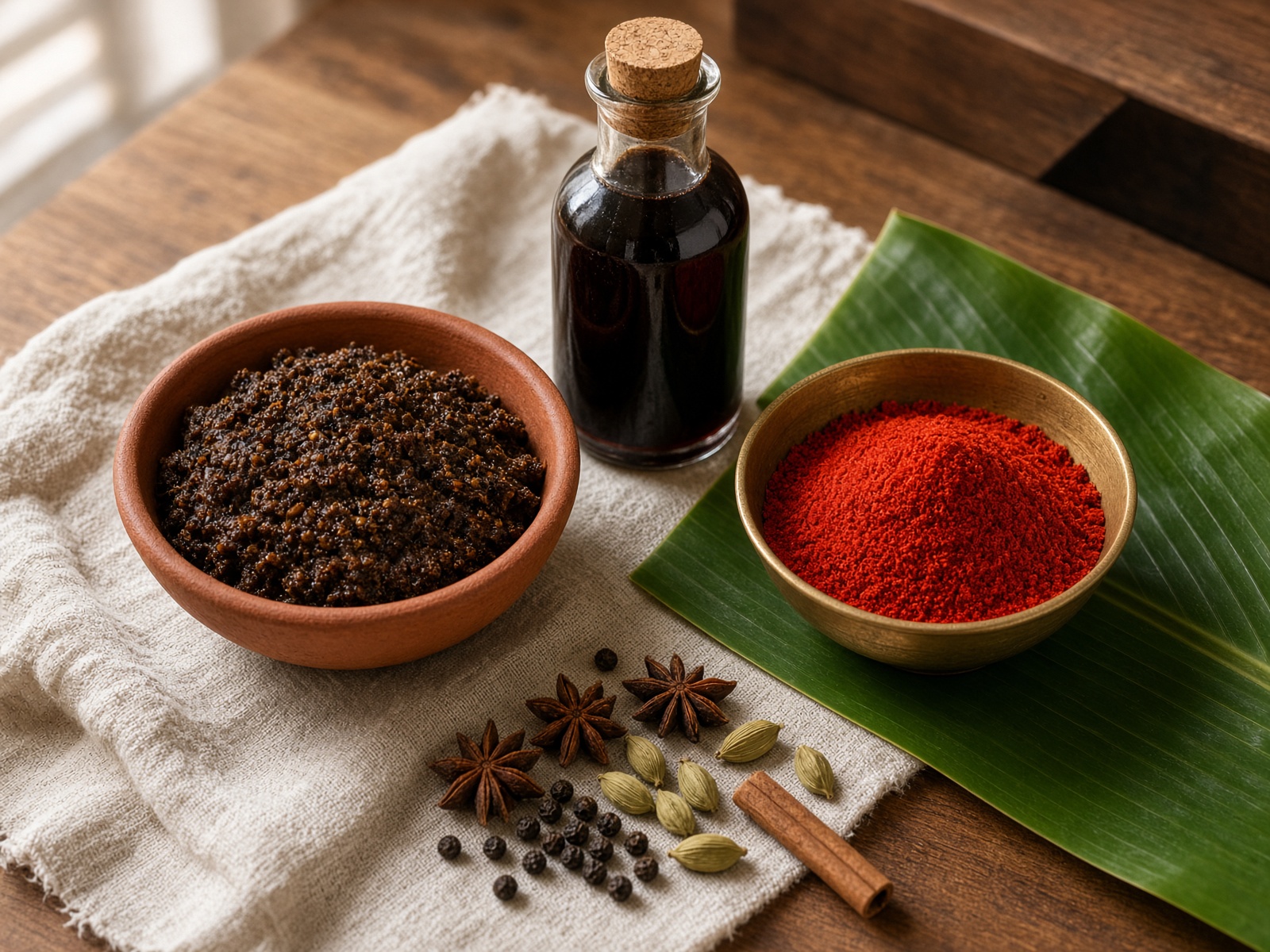
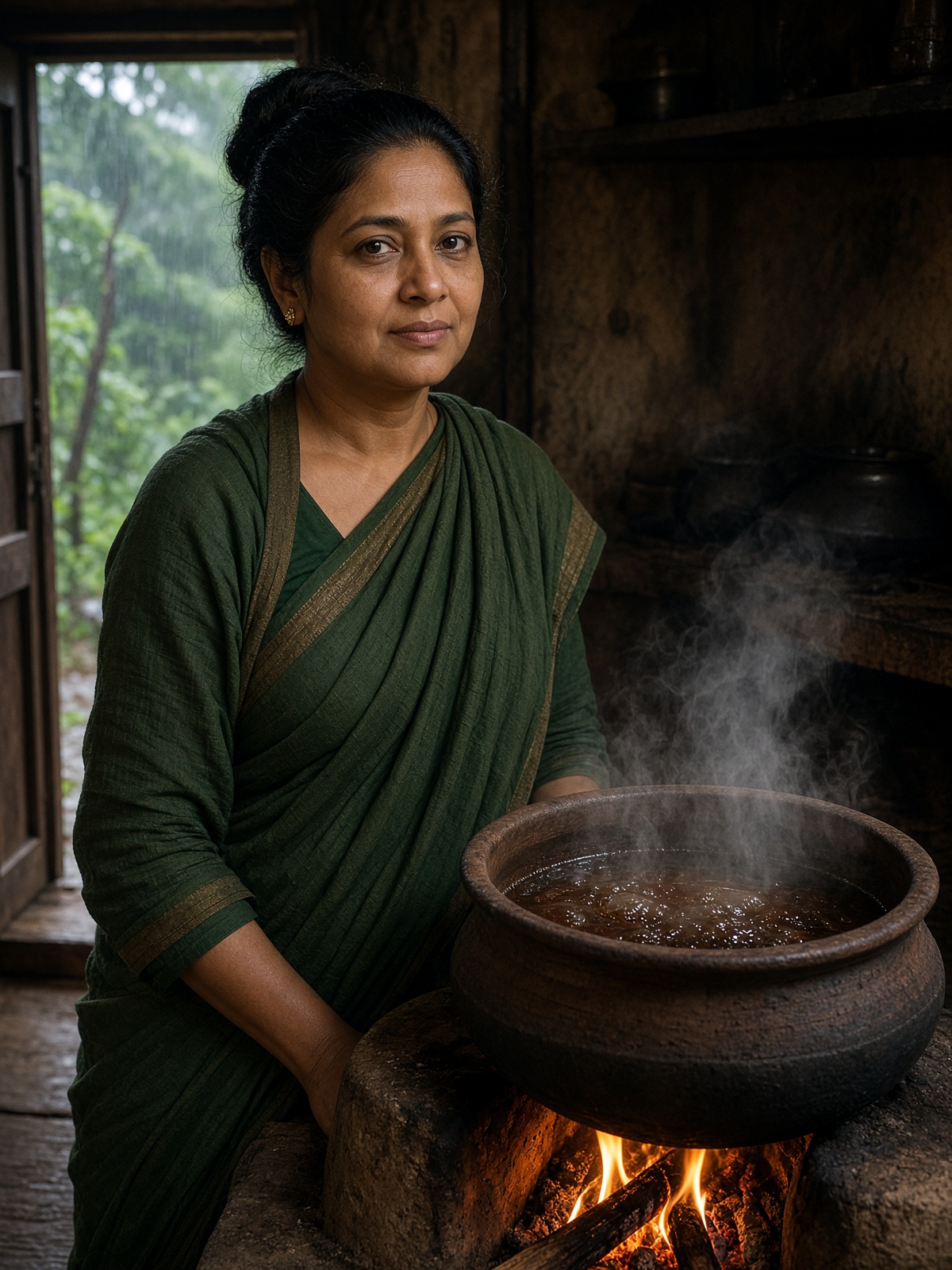
In a Kodava kitchen the bottle that matters most is often the smallest and the darkest. Kachampuli is not grape vinegar and it is not tamarind water. The fruit is left to break down, the juice is drawn, and then it is boiled slowly in a clay pot until it thickens into a near-black concentrate. No sugar. No colour. No preservative. Young kachampuli pours. Aged kachampuli clings to the spoon.
Subbi learned the boil from her mother, who learned it from hers. She keeps last year's bottles at the back of a wooden cupboard. They grow denser, darker, more sour. A teaspoon is enough to turn a pot of pork or chicken into something that could only have come from these hills.
We take what she will spare after her own family is stocked for the year. That is the limit. There is no scaling a monsoon.
The ritual. Fruit gathered only from the ground, June through August. Juice drawn, then reduced on wood fire until a drop on a steel plate holds its shape.